

 Feed back
 Privacy Policy
Astrology, as a symbolic system, relies heavily on visual and conceptual representations to convey complex celestial dynamics. At its core, **astrology symbol meanings** serve as a coded language through which planetary positions, zodiac signs, and cosmic energies are interpreted. These symbols—often referred to as glyphs—are not arbitrary designs but carefully constructed icons that encapsulate millennia of astronomical observation, mythological tradition, and esoteric philosophy.
Understanding these symbols enhances the accuracy of astrological interpretation. For instance, recognizing that the glyph for Aries (♈) resembles a ram’s horns isn’t merely illustrative—it reflects the sign’s assertive, pioneering nature. When practitioners grasp the deeper **astrology meaning** behind each symbol, they move beyond surface-level sun sign readings into nuanced analyses of personality, timing, and life patterns.
Moreover, connecting visual glyphs to broader astrological principles allows for a more holistic understanding. Each symbol acts as a gateway to elemental associations, planetary rulerships, and modal expressions (cardinal, fixed, mutable). By decoding these layers, students and professionals alike can unlock richer insights from natal charts and transits, making the study of **astrology symbol meanings** essential for any serious engagement with the art.

The development of astrological glyphs traces back to ancient civilizations such as Babylon, Egypt, and Greece, where early astronomers combined observational data with spiritual beliefs. The earliest known zodiacal diagrams appear in Mesopotamian cuneiform tablets dating to around 1000 BCE, while Greek scholars like Ptolemy later formalized many of the symbolic conventions still used today.
These symbols were designed to encode multiple dimensions of meaning. For example, the circle in many glyphs traditionally represents spirit or unity, the crescent signifies receptivity or soul, and the cross denotes material form or earthly experience. In the symbol for Venus (♀), the circle above the cross illustrates the idea of divine love transcending physical existence—a concept rooted in both alchemical and Neoplatonic thought.
Over centuries, these glyphs evolved through medieval Islamic astronomy, Renaissance Hermeticism, and Enlightenment-era standardization. By the 17th century, European astrologers had largely agreed upon a consistent set of symbols, which were later adopted by modern astrological software and publications. This standardization ensures that whether one reads a chart in London, New York, or Sydney, the **astrology symbol meanings** remain universally recognizable, preserving continuity across cultures and generations.
Today, organizations such as the International Society for Astrological Research (ISAR) and the Federation of Australian Astrologers advocate for maintaining these traditional forms, emphasizing their importance in accurate chart interpretation and academic study.
Each of the twelve zodiac signs is represented by a unique glyph that distills its essence into a single iconic form. From Aries (♈) to Pisces (♓), these symbols reflect not only the namesake animals or figures but also deeper psychological and energetic qualities.
Take Taurus (♉), whose symbol resembles a bull’s head and horns. Beyond this literal image, the closed circle at the base suggests stability and persistence, aligning with Taurus’s earth-element association and fixed modality. Similarly, Cancer (♋) features a crab-like shape, but its looping curves also evoke emotional depth and protective instincts—hallmarks of this water sign.
The four classical elements—fire, earth, air, and water—are intrinsically linked to the zodiac’s symbolic structure. Fire signs (Aries, Leo, Sagittarius) often contain upward-pointing shapes, symbolizing energy, inspiration, and action. Earth signs (Taurus, Virgo, Capricorn) incorporate grounded lines or enclosed forms, reflecting practicality and material focus. Air signs (Gemini, Libra, Aquarius) use balanced, symmetrical designs suggesting intellect and communication, while water signs (Cancer, Scorpio, Pisces) employ flowing, curvilinear motifs representing emotion and intuition.
Even the stroke order and direction of a glyph carry significance. For example, the arrow-like tail of Scorpio (♏) points outward aggressively, mirroring its transformative and penetrating nature. Meanwhile, Pisces (♓) uses two interwoven lines to represent duality, connection, and spiritual transcendence.
By analyzing how shape, line, and curve reflect personality traits and cosmic energies, practitioners gain access to a visual lexicon that enriches their interpretive toolkit. This attention to detail transforms simple chart reading into a multidimensional exploration of self and cosmos.
Just as the zodiac signs have symbolic representations, so too do the planets—and their glyphs are equally rich in meaning. The Sun (☉) is depicted as a circle with a dot at its center, symbolizing pure consciousness, vitality, and the ego. The Moon (☽), with its open crescent, reflects receptivity, emotions, and the subconscious mind.
Mercury (☿), messenger of the gods in mythology, combines a crescent (mind), a circle (spirit), and a cross (matter), illustrating its role in bridging thought, spirit, and physical expression. Venus (♀) fuses the circle of spirit over the cross of matter, denoting harmony, beauty, and relational values. Mars (♂), in contrast, features an arrow emerging from the circle, representing drive, aggression, and assertion.
The outer planets—Uranus (⛢), Neptune (♆), and Pluto (♇)—were discovered in the modern era and thus have more recent symbolic origins. Uranus’s glyph, a combination of the Sun’s disk and a central vertical line, signifies enlightenment and rebellion against tradition. Neptune’s symbol blends the crescent and cross beneath a horizontal bar, evoking dissolution, illusion, and spiritual surrender. Pluto’s glyph, resembling a monogram of the letters “P” and “L” (honoring Percival Lowell, who predicted its existence), also carries connotations of power, transformation, and the underworld.
These planetary symbols are deeply rooted in alchemical traditions and mythological archetypes. For example, the glyph for Jupiter (♃) originally derived from the hieroglyph for Zeus’s hand, later stylized into a letter “Zeta” with a descending stroke. Such historical context informs contemporary interpretations, allowing astrologers to derive nuanced **astrology meaning** from glyph structure and cultural lineage.
In real-world practice, the ability to read and interpret symbols is indispensable for effective birth chart analysis. A natal chart is essentially a map composed entirely of glyphs—planets, houses, aspects, and signs—all interacting within a geometric framework. Identifying key symbols quickly allows astrologers to spot dominant themes.
For instance, if a chart contains multiple instances of the Saturn symbol (♄)—especially in angular houses or forming tight aspects—it may indicate a life shaped by discipline, limitation, or karmic lessons. Conversely, repeated appearances of Jupiter (♃) could suggest expansion, optimism, and opportunities for growth.
Recognizing patterns through emphasized glyphs helps uncover psychological dynamics. An abundance of water sign symbols (Cancer, Scorpio, Pisces) might point to high emotional sensitivity, while clusters of air signs (Gemini, Libra, Aquarius) could signal intellectual orientation and social fluency. Practitioners often use color-coding or symbol-counting techniques during initial chart scans to identify elemental imbalances or planetary dominance.
Translating these visual cues into meaningful insights requires both technical knowledge and intuitive synthesis. For example, seeing Neptune (♆) conjunct the Ascendant may prompt questions about identity confusion or artistic gifts, depending on context. Mastery of **astrology symbol meanings** enables interpreters to move fluidly between symbolic form and lived experience, offering clients clarity and guidance grounded in both tradition and observation.
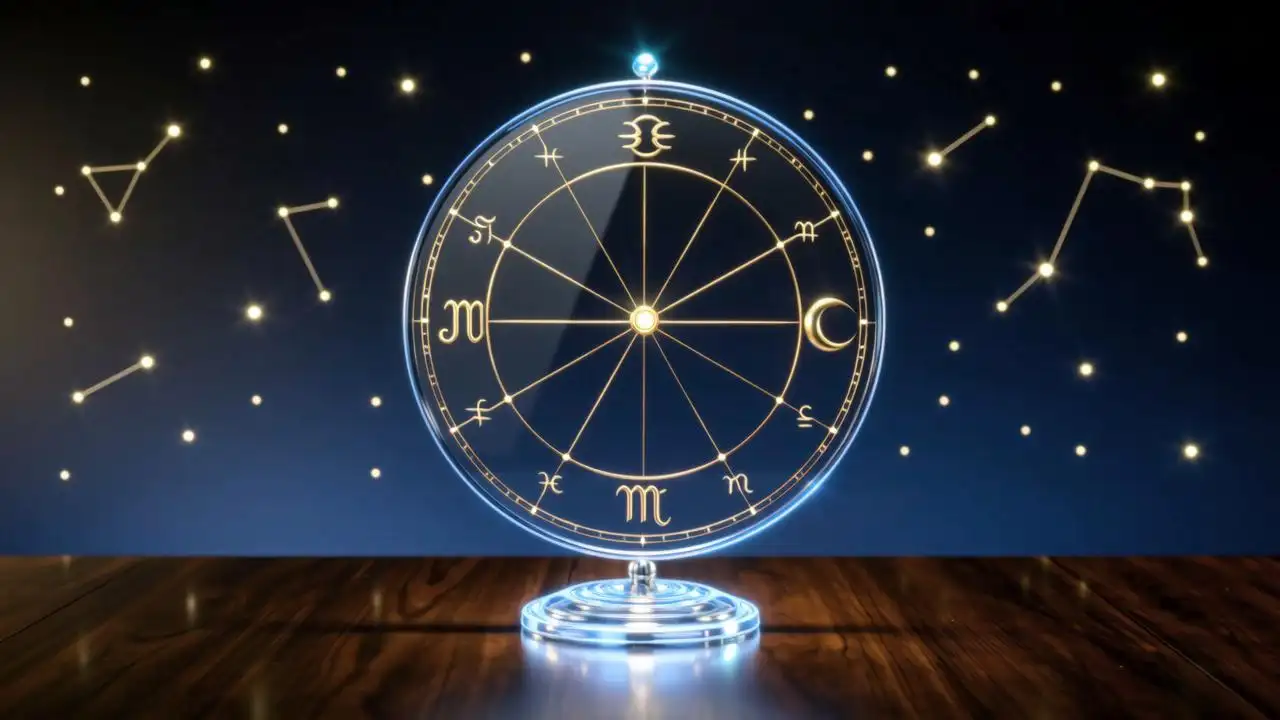
Symbols are the foundation of astrological literacy. As demonstrated throughout this article, understanding **astrology symbol meanings** is not just about memorizing shapes—it's about learning a sacred language that connects humanity to the cosmos. From ancient star watchers to modern data-driven astrologers, the consistent use of glyphs ensures continuity and precision in interpretation.
To deepen your mastery, consider engaging in structured study. Recommended resources include Dane Rudhyar’s *The Astrology of Personality*, which explores the philosophical underpinnings of astrological symbols, and Robert Hand’s *Planets in Transit*, which provides detailed interpretations based on planetary glyphs and aspect patterns. Online platforms like Kepler College and the National Council for Geocosmic Research (NCGR) offer accredited courses in symbolic astrology, complete with chart-reading practicums.
Ultimately, the journey into **astrology meaning** begins with curiosity and deepens through disciplined observation. Whether you're interpreting your own chart or assisting others, take time to meditate on each symbol—not just what it represents, but how it feels when drawn, seen, or contemplated. In doing so, you align not only with intellectual knowledge but with the living wisdom encoded in the stars.
【Disclaimer】This article contains information related to Astrology for general educational and informational purposes only. It does not constitute professional advice in psychology, medicine, or any regulated field. Readers are encouraged to consult qualified experts before making decisions based on the content provided. The author and publisher disclaim responsibility for any actions taken as a result of reading this material.
Emily Carter
|
2025.12.18


