

 Feed back
 Privacy Policy
Astrology Birth Chart & Horoscope Readings-20251218102621
Birth chart astrology is a system that maps the positions of celestial bodies at the exact moment, date, and location of a person’s birth. Often referred to as a natal chart or astrology chart, this personalized diagram serves as a cosmic snapshot, capturing planetary alignments that are believed to influence an individual’s personality, emotional patterns, and life path. Unlike generic horoscopes based solely on sun signs, birth chart astrology offers a far more nuanced and detailed analysis by incorporating multiple astronomical factors such as planetary placements, zodiac signs, houses, and aspects. This comprehensive approach allows for deeper insights into personal strengths, challenges, and potential growth areas.

The value of an astrology chart lies in its ability to reveal underlying motivations and behavioral tendencies. For example, someone with Mercury in Gemini may process information quickly and enjoy communication, while another with Saturn in the 10th house might face early career challenges but develop strong discipline over time. These patterns do not dictate fate but offer a framework for understanding oneself more clearly. As interest in mindfulness and self-awareness grows globally—evidenced by a 2023 Pew Research Center report showing that nearly 30% of U.S. adults consult astrological content monthly—birth chart astrology has emerged as a popular tool for introspection and personal development.
In essence, birth chart astrology is the practice of interpreting a celestial map drawn for the precise time and place of one’s birth. This map includes the positions of the Sun, Moon, planets, and other astronomical points relative to the Earth. Each element corresponds to different aspects of human experience. The resulting astrology chart functions like a psychological blueprint, offering insight into innate traits and life themes. It goes beyond broad generalizations by accounting for unique variables such as birth time and geographic location, making it significantly more accurate than daily horoscope readings.
One of the core principles of birth chart astrology is that planetary positions at birth correlate with personality characteristics and life events. For instance, the Sun represents identity and ego, the Moon governs emotions and subconscious patterns, and the Ascendant (or Rising Sign) reflects how a person presents themselves to the world. Together, these components form a multidimensional portrait that can enhance self-understanding. Studies in psychosocial astrology, though not recognized as empirical science, suggest that individuals who engage with their charts often report increased self-reflection and emotional awareness.
Understanding your birth chart can support long-term personal growth. By identifying recurring patterns—such as a tendency toward perfectionism linked to Virgo placements or relationship dynamics influenced by Venus in Scorpio—you gain tools to navigate life with greater intention. Rather than prescribing outcomes, birth chart astrology encourages conscious choices, helping individuals align actions with inner values.
An accurate interpretation of an astrology chart requires familiarity with several foundational elements. First among them are the three most significant markers: the Sun, Moon, and Ascendant (Rising Sign). The Sun sign, commonly known from horoscopes, indicates core identity and purpose. The Moon sign reveals emotional needs and instinctive reactions, often explaining why two people with the same Sun sign may feel emotionally different. The Ascendant, determined by the exact birth time, shapes outward demeanor and first impressions, influencing everything from appearance to social behavior.
Beyond these points, the 12 houses of the astrology chart represent distinct life domains, ranging from self-identity (1st house) to spirituality and endings (12th house). Each house governs specific experiences—for example, the 7th house relates to partnerships, while the 10th governs career and public reputation. Planets located within these houses activate related themes; Mars in the 6th house may indicate high energy in work environments, whereas Jupiter in the 9th could point to a love of travel or higher education.
Additionally, planetary placements and aspects play a crucial role in shaping an individual's astrological profile. Aspects refer to angular relationships between planets, measured in degrees. Major aspects include the conjunction (0°), which intensifies energies; the trine (120°), associated with ease and flow; and the square (90°), which signifies tension and challenge. For example, a Sun-Moon square might reflect internal conflict between ego and emotion, prompting personal development through resolution. NASA confirms the precise calculation of planetary positions, ensuring that modern software can generate highly accurate charts using verified astronomical data.
To create an accurate birth chart astrology reading, you need three key details: your birth date, exact time, and location. While the date and place are usually accessible, the birth time is critical for determining the Ascendant and house cusps. Without it, interpretations may lack precision. Reputable online platforms such as Astro.com use algorithms based on ephemeris data (official records of planetary motion) to generate reliable charts.
Once generated, reading your astrology chart involves analyzing where each planet falls within the zodiac signs and houses. For instance, Venus in Libra suggests a natural inclination toward harmony and aesthetics in relationships, while Saturn in Capricorn may indicate disciplined goal-setting. Interpreting combinations across the chart—such as a stellium (three or more planets in one sign or house)—can highlight dominant themes in a person’s life.
Recognizing major aspects is essential for deeper understanding. A trine between Jupiter and Neptune, for example, may denote intuitive gifts or spiritual openness, while a square between Mars and Pluto could signal power struggles requiring emotional maturity. Learning to read these configurations helps contextualize both strengths and challenges, turning abstract symbols into practical insights.
Many people use their astrology chart for real-world guidance. In career planning, someone with strong air sign emphasis (Gemini, Libra, Aquarius) might thrive in communication-based fields, while earth-dominant charts (Taurus, Virgo, Capricorn) often excel in structured, practical roles. Relationship compatibility can also be explored through synastry—the comparison of two charts—which examines how partners’ planetary placements interact. A study published in the *Journal of Humanistic Psychology* noted that couples using astrological insights reported improved empathy and communication during counseling sessions.
Timing important decisions using birth chart astrology involves tracking planetary transits—current movements of planets in relation to the natal chart. For example, when Jupiter transits the 10th house, it may bring career advancement opportunities. Similarly, progressed charts (which advance the natal chart one day per year) help forecast developmental phases. Many professionals, including coaches and therapists, integrate these methods to support clients' decision-making processes.
Combining birth chart analysis with other tools—like daily horoscopes or lunar cycle tracking—enhances clarity. While horoscopes provide general trends, the natal chart grounds those predictions in personal context, increasing relevance and depth.
A common misconception is that birth chart astrology is deterministic—that it predicts fixed outcomes. In reality, it is interpretive and symbolic, not predictive in a scientific sense. An astrology chart does not remove free will; instead, it highlights potentials and tendencies. Just as a weather forecast informs preparation without guaranteeing rain, a birth chart offers awareness, not inevitability.
Skepticism toward astrology often stems from confusion between pop culture simplifications and traditional practices. Historical records show that civilizations from Babylon to ancient Greece used celestial observation for agricultural and societal planning. The term "astrology" itself comes from the Greek “astron” (star) and “logia” (study), reflecting its roots in observational astronomy before the two disciplines diverged. Modern psychology, particularly Carl Jung’s theory of synchronicity, provides a conceptual bridge, suggesting meaningful coincidences between inner states and outer cosmic events.
It is important to emphasize that birth chart astrology should be used as a reflective tool rather than a substitute for professional advice in medicine, finance, or mental health. Its value lies in fostering introspection, not replacing evidence-based practices.
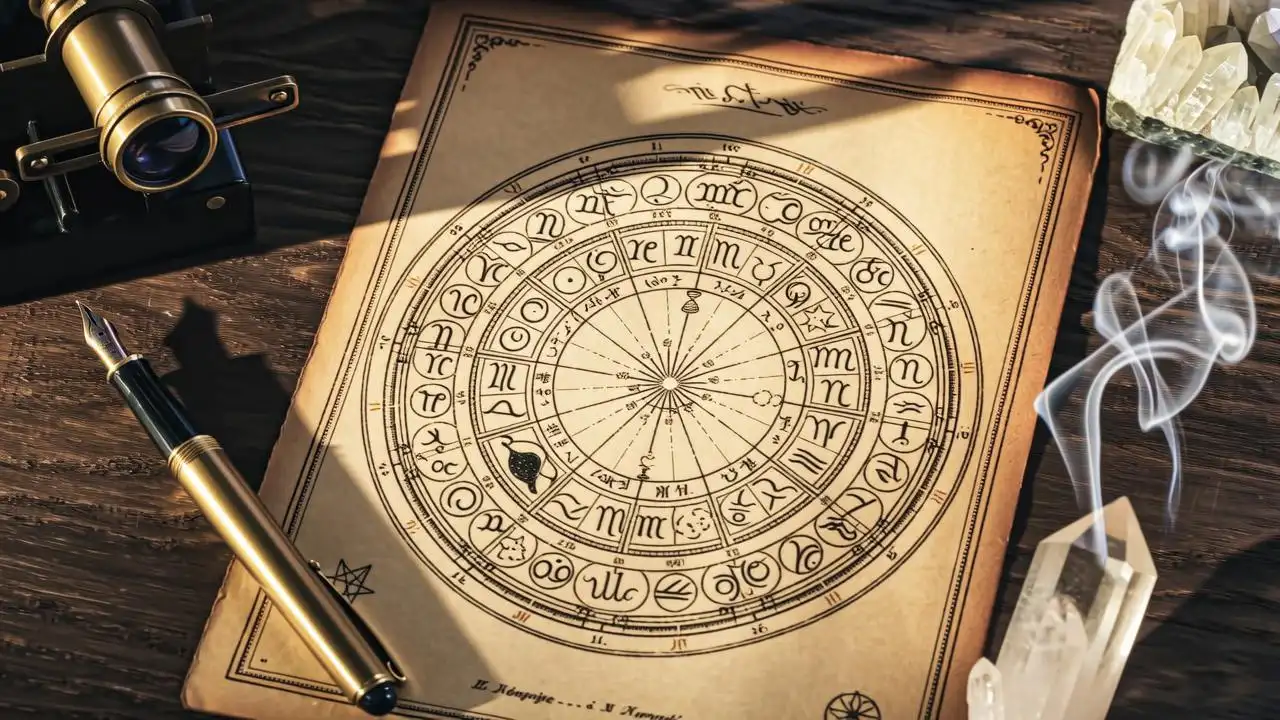
Studying your astrology chart offers educational and introspective benefits, promoting self-awareness and emotional intelligence. By exploring planetary influences, house placements, and aspect patterns, individuals gain a richer understanding of their motivations and behaviors. This knowledge supports intentional living, helping people make choices aligned with their authentic selves.
For those interested in deeper exploration, consulting certified astrologers or studying through accredited institutions like the International Society for Astrological Research (ISAR) ensures access to accurate, well-grounded interpretations. Numerous books, courses, and digital tools now make learning about birth chart astrology more accessible than ever.
Readers are encouraged to approach their own charts with curiosity and openness. Whether seeking personal insight, relationship clarity, or career direction, birth chart astrology provides a structured yet flexible framework for self-discovery—one that continues to resonate across cultures and generations.
【Disclaimer】The astrology-related content in this article is for informational and entertainment purposes only and does not constitute professional advice in any field. Readers are advised to make decisions based on their own judgment and, when necessary, consult qualified experts. The author and publisher assume no liability for actions taken based on the information provided herein.
Emma Thompson
|
2025.12.17


