

 Feed back
 Privacy Policy
Astrology Birth Chart & Horoscope Readings-20251218102621
Astrology has experienced a notable resurgence in public interest over the past decade. According to Google Trends data from 2015 to 2023, global search volume for terms like "definition of astrology" and "what is astrology" has increased by over 60%, with peaks often aligning with major celestial events such as Mercury retrograde or full moons. This growing curiosity reflects a broader cultural shift toward self-exploration, mindfulness, and alternative frameworks for understanding human behavior. While not grounded in empirical science, astrology continues to serve as a symbolic language that many use to interpret personal experiences, relationships, and life transitions.
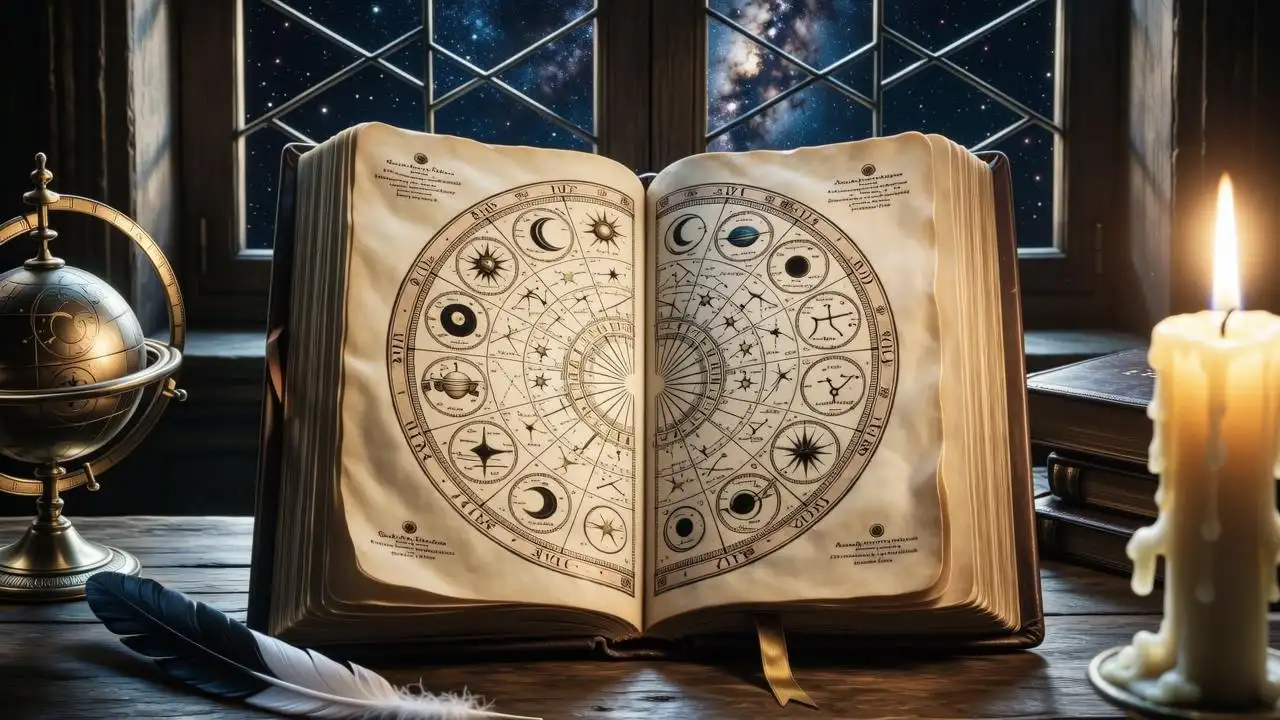
The purpose of this guide is to provide a clear, factual definition of astrology and explain how it functions across historical, cultural, and psychological contexts. As an interpretive system rather than a predictive science, astrology links patterns in the sky—such as planetary positions and zodiac alignments—to human affairs and personality traits. By examining its origins, core components, and modern applications, we aim to offer an objective overview that helps readers understand what astrology is, how it developed, and why it remains culturally significant today.
At its core, the definition of astrology is the study of the positions and movements of celestial bodies—primarily the Sun, Moon, planets, and stars—and their interpreted influence on human behavior, personality, and events on Earth. Unlike astronomy, which is a natural science relying on observation, measurement, and physical laws, astrology is a symbolic and interpretive tradition. The key distinction lies in methodology: while astronomers use telescopes and mathematical models to understand the universe, astrologers analyze birth charts and planetary cycles to derive meaning about individual lives and collective trends.
Central to astrological practice are several foundational elements. First, the **planets** represent different aspects of the psyche—Mars symbolizes action and aggression, Venus governs love and aesthetics, and Saturn relates to discipline and limitation. Second, the **zodiac signs**, twelve in total, divide the ecliptic (the Sun’s apparent path) into 30-degree segments, each associated with specific characteristics. For example, Aries is linked with initiative and courage, while Pisces is associated with intuition and sensitivity.
Third, the **houses** in a natal chart correspond to areas of life such as career, relationships, and health. There are twelve houses, each representing domains like self-identity (First House), wealth (Second House), or spirituality (Twelfth House). Finally, **aspects** refer to the geometric angles formed between planets—such as conjunctions (0°), squares (90°), and trines (120°)—which indicate harmony, tension, or potential for growth in a person's chart. Together, these components form a complex symbolic framework used to interpret an individual’s life path and tendencies.
The roots of astrology trace back over 4,000 years to ancient Mesopotamia, particularly among the Babylonians, who meticulously recorded celestial events as early as 1800 BCE. They believed that omens in the sky reflected divine will and could predict outcomes related to agriculture, politics, and warfare. By the 7th century BCE, systematic star catalogs and planetary observations laid the groundwork for horoscopic astrology—the practice of casting charts based on an individual’s time and place of birth.
This knowledge spread to Egypt and later to Hellenistic Greece, where astrology merged with Greek philosophy and mathematics. Figures like Claudius Ptolemy, a 2nd-century CE astronomer and astrologer, compiled influential works such as the *Tetrabiblos*, which systematized much of Western astrological theory. In India, **Vedic astrology** (*Jyotish*) emerged around the same period, integrating lunar constellations (*nakshatras*) and karma-based interpretations, remaining an integral part of Hindu spiritual life.
During the Islamic Golden Age (8th–14th centuries), scholars in Persia and the Arab world preserved and expanded upon Greek and Indian texts, translating them into Arabic and refining astrological techniques. These works later influenced medieval European courts, where monarchs consulted court astrologers for guidance on state matters. Notably, Tycho Brahe and Johannes Kepler—both renowned astronomers—also practiced astrology, reflecting the blurred line between science and mysticism at the time.
In the 20th century, astrology saw a revival through figures like Carl Jung, who explored its value as a tool for psychological insight. The rise of mass media, especially newspapers and online platforms, popularized daily horoscopes, making astrology accessible to millions. Today, apps like Co-Star and The Pattern have brought personalized astrology into the digital age, further fueling interest in the definition of astrology beyond mere entertainment.
One of the most widely used tools in astrology is the **natal chart**, also known as a birth chart. This diagram maps the positions of the planets at the exact moment, date, and location of a person’s birth. Constructed using astronomical calculations, the chart displays which zodiac sign each planet occupies, along with its house placement and angular relationships (aspects) to other planets. Professional astrologers interpret these configurations to offer insights into personality traits, strengths, challenges, and life themes.
Common applications of astrology include gaining **personal insight**, assessing **relationship compatibility** (synastry), and selecting favorable times for important events (electional astrology). For instance, when two people compare their charts, harmonious aspects between Venus and Mars may suggest strong romantic chemistry, while challenging Saturn-Moon contacts might indicate emotional distance or caregiving imbalances.
Different astrological traditions emphasize varying frameworks. **Western tropical astrology**, dominant in Europe and North America, aligns the zodiac with seasonal cycles, starting Aries at the spring equinox. In contrast, **Vedic (sidereal) astrology**, practiced primarily in India, uses fixed star references and accounts for axial precession, resulting in a roughly 24-degree shift between tropical and sidereal zodiacs. Meanwhile, **Chinese astrology** operates on a 12-year cycle based on lunar years, assigning animal signs (e.g., Dragon, Rabbit) and elemental influences (Wood, Fire, Metal, Water, Earth) to each year, offering another culturally distinct approach to celestial interpretation.
From a scientific standpoint, astrology is classified as a **pseudoscience** by major academic institutions, including the American Association for the Advancement of Science (AAAS) and NASA. The primary reason is the lack of empirical evidence supporting causal links between celestial configurations and human behavior. Controlled studies, such as the famous 1985 double-blind experiment published in *Nature* by Shawn Carlson, tested whether professional astrologers could match natal charts to personality profiles more accurately than chance. The results showed no statistically significant correlation, undermining claims of astrological validity.
Moreover, the mechanisms proposed by astrology—such as gravitational or electromagnetic influences from distant planets—do not align with known laws of physics. For example, the gravitational pull of the delivering obstetrician is stronger on a newborn than that of Mars, yet no one suggests doctors shape personality through gravity.
Despite these criticisms, common misconceptions persist. One is the belief that astrology makes deterministic predictions. In reality, most modern practitioners view it as a tool for reflection and awareness, not fate. Another misconception is conflating sun sign horoscopes (often oversimplified in media) with full-chart analysis. A comprehensive reading considers far more than just one’s sun sign, incorporating moon, rising sign, and planetary aspects for nuanced interpretation.
To summarize, the definition of astrology encompasses a symbolic system that interprets celestial patterns in relation to human experience. While distinct from astronomy in both method and intent, astrology has persisted across civilizations due to its capacity to provide narrative structure, emotional resonance, and introspective depth. Whether used for self-understanding, relationship guidance, or timing decisions, it functions less as a scientific predictor and more as a cultural and psychological framework.
Its enduring popularity—evident in rising search trends, app downloads, and social media engagement—suggests that people continue to seek meaning through symbolic systems, especially in uncertain times. Rather than dismissing astrology outright, a balanced perspective encourages informed curiosity and critical thinking. Readers exploring “what is astrology” should do so with awareness of its limitations while appreciating its role in art, mythology, and personal development.

【Disclaimer】The content related to astrology discussed in this article is provided for informational and educational purposes only. It does not constitute professional advice in psychology, astronomy, or any other scientific field. Decisions regarding personal, medical, financial, or legal matters should be made in consultation with qualified experts. The author and publisher disclaim any liability for actions taken based on the information presented herein.
Clara Bennett
|
2025.12.18


